10. Our Relationship with the Scale in the Recovery Journey
Part One: How Our Journey with the Scale Begins
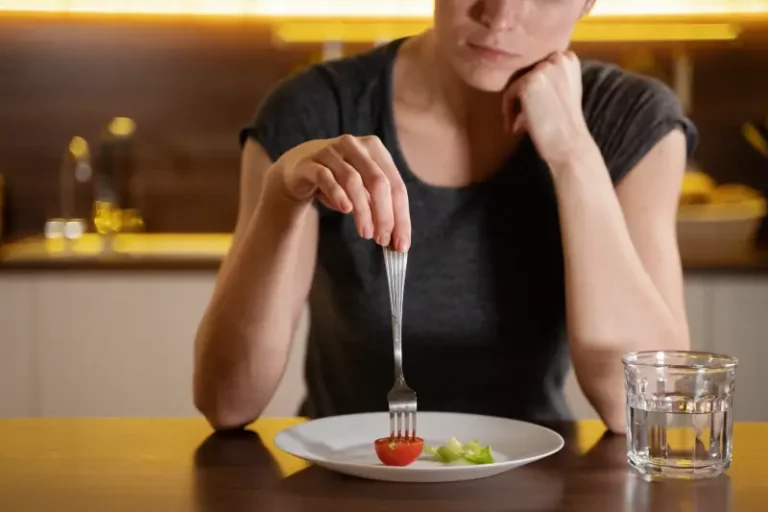
In Overeaters Anonymous, many of us begin our recovery with a relationship to our bodies and the scale that is filled with fear, control, and shame. For years, the scale was not just a measurement tool; it was a powerful symbol of self-worth, obsessive control, punishment, and the prediction of failure. Some of us stepped on the scale repeatedly throughout the day to calm a momentary wave of anxiety; others avoided it entirely for years, because facing a number we feared felt emotionally unbearable.
During those times, the scale became a kind of “master”—an indication that declared our success or failure. OA literature is filled with our personal stories, showing how weight obsession or complete avoidance of the scale can deeply affect our lives. Social and cultural pressures make this relationship even more complicated; society has taught us that weight is a measure of health, value, and even lovability.
However, in the journey of recovery, our relationship with the scale begins to transform. Weighing ourselves is no longer a tool of pressure or shame; it becomes part of our spiritual growth, our physical–emotional awareness, and our self-care. We learn to approach weighing with honesty and acceptance, and to distinguish between measuring and assigning value. The scale is no longer an enemy or a judge; it becomes a truthful messenger that reflects our body’s patterns and invites us to understand ourselves more deeply.
Throughout this process, our experience shows us that our illness has three dimensions: physical, mental, and spiritual. Just as eating an unhealthy food can negatively affect the body and mind, an unhealthy relationship with the scale can also create stress and anxiety. Recovery does not happen in isolation, and abstinence only becomes meaningful when we consider the social and environmental factors around us. In reality, our relationship with the scale is not merely an individual experience; it is shaped within a broader social and cultural context.
Part Two: The Cycle of Obsession and the Role of the Scale in Recovery
Along the path of abstinence and recovery, many of us discovered that obsessive weighing—or total avoidance of the scale—was often intertwined with cycles of anxiety, body shame, and unhealthy emotional regulation. For some of us, the scale acted as a trigger that pushed our nervous system into a threat state: a higher number meant failure and lack of willpower, while a lower number offered temporary relief but served as a warning to exert even more control.
We learn that behind these behaviors lie deeper emotions: fear of not being enough, a strong need for approval, an excessive need for control, or avoidance of facing reality. Mindful weighing helps break this cycle and teaches us to differentiate between “measuring” and “assigning value”. From this new perspective, the scale is neither an enemy nor a judge—it is simply a biological indicator reflecting the physical patterns of our body.
Healthy weighing, when done with the intention of care and awareness, becomes part of our spiritual program. We begin to view it just like calling our sponsor, writing our steps, or praying and meditating: a tool for self-knowledge, grounding in reality, and cultivating inner peace. In this sense, the number on the scale is not the final goal but merely one sign among many others that reflect our physical and spiritual condition—such as sleep quality, energy levels, emotional stability, eating regularity, and our connection with a Higher Power.
We have come to understand that the scale was never our enemy; it was we who assigned meanings to it far beyond its function. We turned it into a tool for measuring our worth, adequacy, willpower, and even lovability. What hurt us was not the number itself—it was the interpretations, beliefs, and fears layered onto it by culture, family, society, and our own experiences.
We also recognized that the scale is a cultural symbol, shaped by beauty norms, body ideals, and media pressures. In a society where numbers—from grades and rankings to weight and height—are presented as measures of worth, it is no surprise that a simple object becomes a source of anxiety, shame, or identity. Our experience shows that with every number on the scale, we crafted a new story for ourselves: “I failed again,” “I’m still not enough,” “Everything is ruined,” or on the other side, “Finally I’m doing well,” “Now I can let go.” But these stories were actually psychological responses to the internal and external pressures we carried.
With the beginning of recovery, we gradually learn to redefine our relationship with signs and indicators. For some of us, the scale becomes an informational tool rather than a moral one—something that can help us understand our bodies better, observe changes, and recognize physical trends.
Part Three: Times and Conditions When We Should Avoid Weighing Ourselves
In recovery, we learn that weighing ourselves is not always helpful. Certain situations can turn the scale from a tool of care into a trigger for anxiety, shame, or obsession. Our experience shows that during the following times, it is best to pause or limit weighing:
1. When we are emotionally unstable
There are days when anxiety, worthlessness, anger, or emotional exhaustion overwhelm us. In such moments, stepping on the scale is like trying to measure the air during a storm—the result is usually discouragement, intensified cravings, comparison with the past, or slipping back into eating as a way to self-soothe.
OA teaches us: “In the middle of the storm, focus on calm—not the numbers.”
2. When weight has become a measure of worth or identity
Some of us spent years using weight a “the definition of being good or bad”. If weighing triggers shame, pride, a sense of failure, or the urge to be perfect, it is time to stop for a while. Recovery means learning that our worth is constant—even when the number on the scale changes.
3. When weighing is used as punishment or control
Using the scale to scare ourselves, to force dieting, or to seek comfort almost always leads to failure.
If the number is lower → a false sense of safety or hidden pride.
If the number is higher → hopelessness, shame, and increased obsessive behaviors.
4. When we weigh ourselves too frequently
Daily or multiple weigh-ins a week make our minds dependent on the number. They disrupt emotions, influence food decisions, and turn weight into a mood regulator.
If the number decides whether our day is good or bad, we need to reduce or temporarily stop weighing.
5. After a slip or period of overeating
Weighing immediately after a slip is a search for shame and usually leads to sinking deeper into feelings of failure. This can enlarge the slip and weaken our trust in the program.
In recovery, after a slip we return to spiritual tools—not to the scale.
6. During certain physical conditions or when advised by a doctor or sponsor
Sometimes, we need to stay away from the scale so the mind can heal its relationship with the body and food. Examples include: menstruation, infections, or natural hormonal fluctuations. During these periods, weight may shift and trigger anxiety or shame. The focus in such times should be on stable food behaviors and non-weight indicators of recovery.
Section Four: How to Practice Healthy Weighing
In OA, we learn that when weighing is done with the intention of care and awareness, it can be calm, neutral, and helpful. Our experience shows that following a few key principles can turn the scale from a source of anxiety into a tool for self-care and insight:
1. Let weighing be a spiritual decision, not an emotional one
We schedule our weighing in advance and coordinate it with our sponsor. This makes it a tool for awareness rather than a reaction to momentary feelings. If on a certain day we feel that our mind or heart is not ready to see a number, we can postpone it.
This is not a sign of weakness—it is a sign of self-respect and awareness.
2. Weigh under consistent and specific conditions
To reduce fluctuations and avoid misinterpreting the number, we weigh ourselves under the same conditions:
In the morning, after using the bathroom
With no clothes or similar clothing each time
Before eating or drinking
Using the same scale
This helps ensure the number is simply neutral information rather than something that triggers emotions.
3. Maintain a neutral outlook without jumping to conclusions
When we step on the scale, we remind ourselves that today’s number is not “us”—it is only information about our body at this moment. There is no need for quick interpretations. Sometimes the healthiest choice is simply to note the number and move on.
4. Share the number with a sponsor or trusted person
Sharing the weight number with someone reliable reduces its emotional weight. It helps the mind break out of cycles of worry or judgment and keeps the focus on awareness rather than fear.
5. Focus on non-weight indicators
Weight is not always the most accurate marker of recovery. In OA, we pay attention to signs such as:
Mental calmness
Reduced cravings
Consistency with our food plan
Emotional stability
Quality of sleep
A healthier relationship with food and our body
Many of us have found that when we focused on these indicators, our weight naturally shifted—slowly and gently.
Section Five: Comfortable Weight and Its Meaning in Recovery
One of the key concepts in the recovery journey is the idea of comfortable weight. A comfortable weight is the weight at which the body naturally feels calm and balanced—without strict dieting, excessive control over food, or self-blame.
This weight is neither a number imposed on us by society nor the result of constant effort to lose or gain weight. It is the weight our body naturally gravitates toward, where we feel ease, health, and balance.
In the OA program, reaching a comfortable weight is deeply connected to spiritual principles and the Twelve Steps:
Step One: Accepting our inability to control food and acknowledging our need for a Higher Power.
This acceptance is the first step toward reaching a comfortable weight, because personal willpower alone is not enough.
Steps Two and Three: Restoring our trust in a Higher Power to guide us toward the body’s natural rhythms and true needs. We learn to listen to our body and work with it rather than forcing it.
Food is no longer an enemy—it becomes a tool for life and health.
From the perspective of OA’s Traditions, comfortable weight is also connected to anonymity and service:
Anonymity: It frees us from comparison and social judgment, shifting the focus toward genuine health and inner satisfaction—not the number on the scale.
Service: By sharing our experience, we help others find their own path toward a comfortable weight, without pressure, control, or perfectionism.
A comfortable weight is more than a number on the scale—it is a state of physical, emotional, and spiritual balance. At this weight, the body, mind, and spirit move together in harmony. Food becomes a part of balanced living rather than a source of anxiety.
Our shared experience shows that through acceptance, practicing the Steps, and connecting with others, we can reach a comfortable weight and live a life filled with peace, serenity, and self-care.
On this journey, the scale is neither a judge nor an enemy—it is a neutral, honest messenger that reflects just one small part of our overall well-being, not all of it.
Section Six: Summary and Practical Recommendations for Us in OA
In the recovery journey, the scale transforms from an enemy and a judge into a tool for care and awareness.
Our experience shows that a healthy relationship with the scale and with weight is the result of acceptance, honesty, awareness, and practicing the Steps.
Key recommendations for us:
1. Weigh yourself with the right intention:
Always ask yourself before stepping on the scale: Is my purpose awareness and self-care, or obsession and control?
2. Keep conditions consistent:
Morning, after using the bathroom, with similar clothing, and on the same scale.
3. Maintain a neutral attitude:
The number is just information—not a measure of worth or success.
4. Share it with a sponsor or trusted person:
Doing so reduces emotional pressure and helps us stay focused on awareness rather than judgment.
5. Focus on non-weight indicators of recovery:
Mental calmness, reduced cravings, adherence to our food plan, emotional stability, better sleep, improved relationship with food and the body
Comfortable weight is our long-term goal: A weight at which the body, mind, and spirit are in balance, and food is experienced as a tool for life and health—not fear or control.
On this path, the scale is simply a neutral, honest messenger inviting us toward care, awareness, and self-kindness.
Our practical message for daily life:
When weight fluctuation happens, instead of anxiety or self-blame, simply observe and record it.
If weighing triggers obsession or a sense of failure, take a break and return your focus to the Steps and spiritual tools.
After a slip or a period of overeating, do not go to the scale; first reconnect with spiritual tools to get back on track.
Learn that our true weight is not the number on the scale—it is the quality of our life, our emotional and physical health, and the kindness we show ourselves.
By following these principles, we can turn the scale from a source of anxiety into an honest companion on the path of recovery.
This is the peace we have long been searching for: peace with the scale, peace with the body, and peace with ourselves—
a peace born from acceptance, honesty, and gentle self-care.
A member who had been in the program for many years once said:
Whether you believe a Higher Power manages your weight or you believe that science is responsible for it, in either case—and in the flow of the recovery program—weight is ultimately something that belongs to the realm of the Higher Power, not us.
Therefore, our task is to work the recovery program and trust that our weight is one of the ways God expresses His will.